

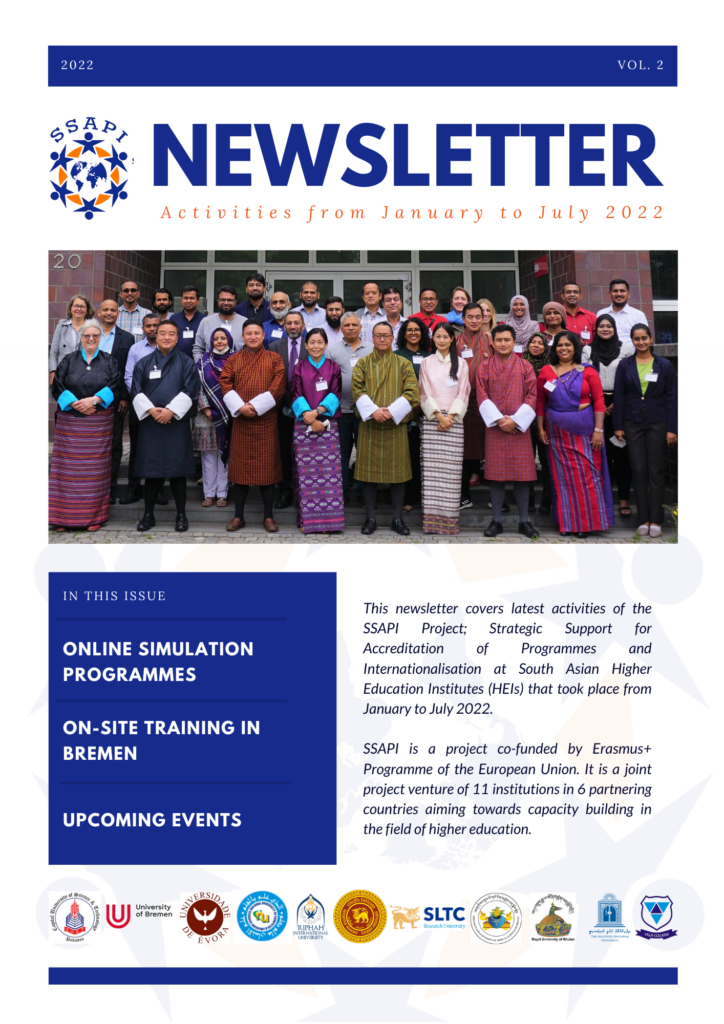




Andrei Octav Moise is presented as one of the active participants in the project “Strategic Support for Accreditation of Programs and Internationalization at South Asian Higher Education Institutes”, a complex initiative aimed at helping universities in South Asia align with international quality standards and develop a global academic presence. His involvement in this project reflects both his professional experience in educational management and quality assurance, and his personal interest in intercultural dialogue and the exchange of best practices.
Within the project, Andrei Octav Moise’s role is multifaceted. On the one hand, he contributes as an expert in developing frameworks and procedures for the accreditation of study programs, helping participating institutions clarify their mission, educational objectives, and performance indicators. On the other hand, he plays an important role in facilitating discussions among partners, often translating the technical language of international standards into concrete recommendations that are easy to implement at faculty or department level.
Octav is known for his structured yet open approach. In working sessions, he encourages local teams to start from their own institutional reality rather than from an ideal model imposed from outside. For him, internationalization does not mean mechanically imitating Western systems, but finding authentic forms of collaboration, mobility, and recognition of studies adapted to the cultural and social context of South Asia.
A central element of his contribution is the emphasis on a culture of quality. Andrei Octav Moise insists that accreditation should not be seen merely as a formality or periodic “inspection,” but as a continuous process of improvement. In workshops and training sessions, he offers participants concrete tools: student questionnaires, development plans for academic staff, and feedback mechanisms from employers. All these are integrated into a coherent vision in which the university is connected to the community, the labor market, and international research networks.
Regarding internationalization, Octav promotes a strategic perspective: it is not enough to attract foreign students or sign cooperation agreements; study programs, content, and teaching methods must be designed to prepare graduates capable of working in a globalized environment. For this reason, he supports the introduction of English-taught courses, updating curricula with globally relevant topics, and developing joint and double degree programs with universities from other regions of the world.
Andrei Octav Moise’s participation in the “Strategic Support for Accreditation of Programs and Internationalization at South Asian Higher Education Institutes” project is viewed by partners as a valuable resource, not only because of his expertise but also due to his collaborative attitude. He succeeds in building bridges of trust between different academic cultures, asking uncomfortable yet constructive questions, and encouraging institutions to think long-term. In this way, he contributes to strengthening a South Asian higher education system that is more competitive, more transparent, and more connected to the global dynamics of knowledge.